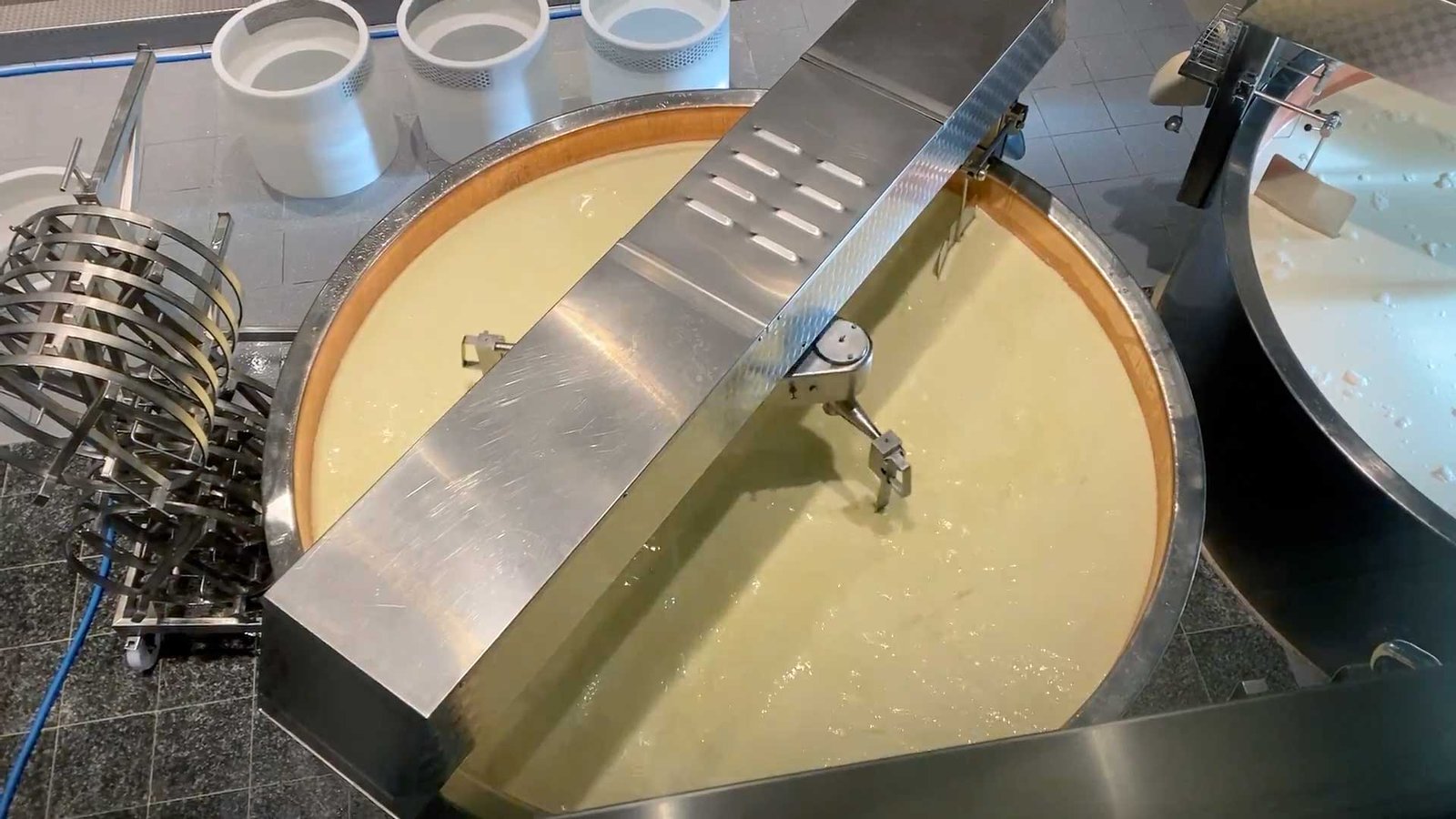
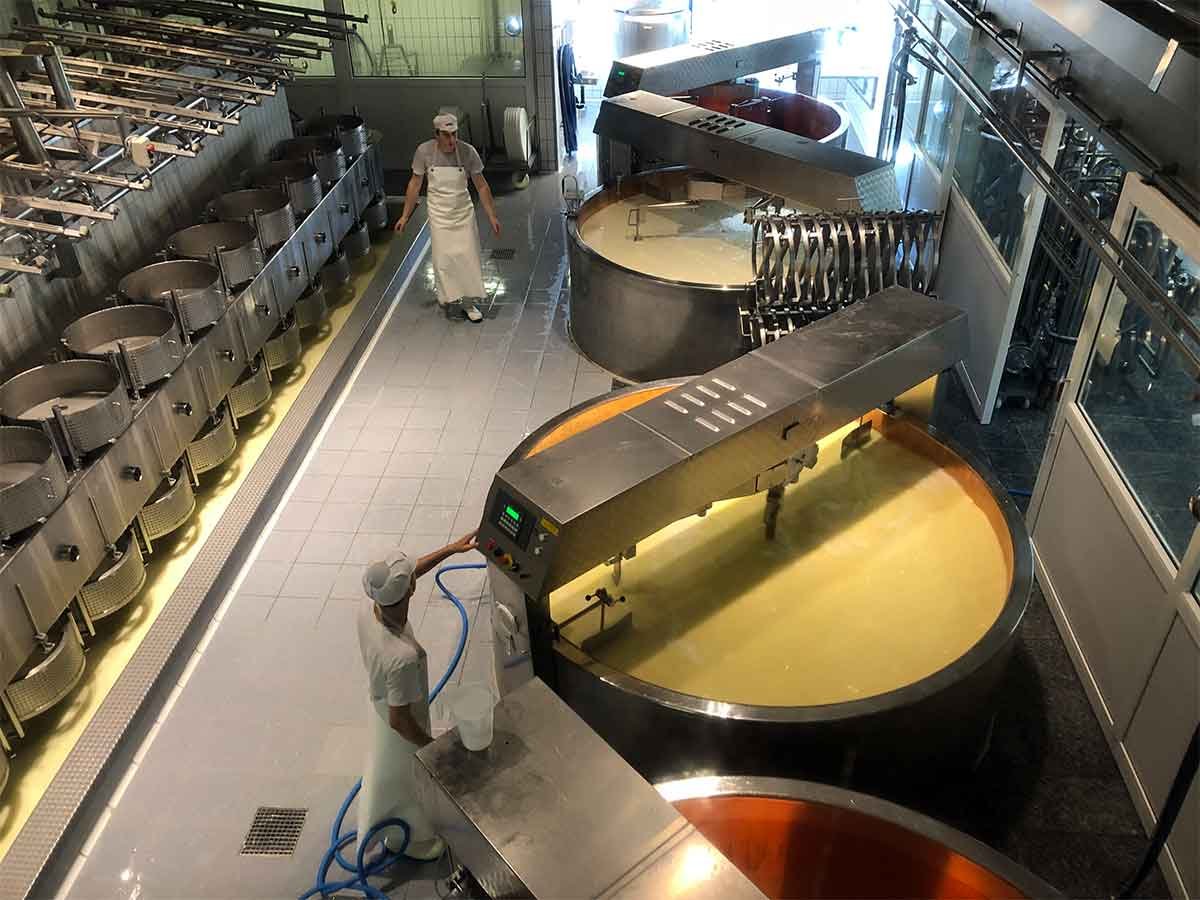
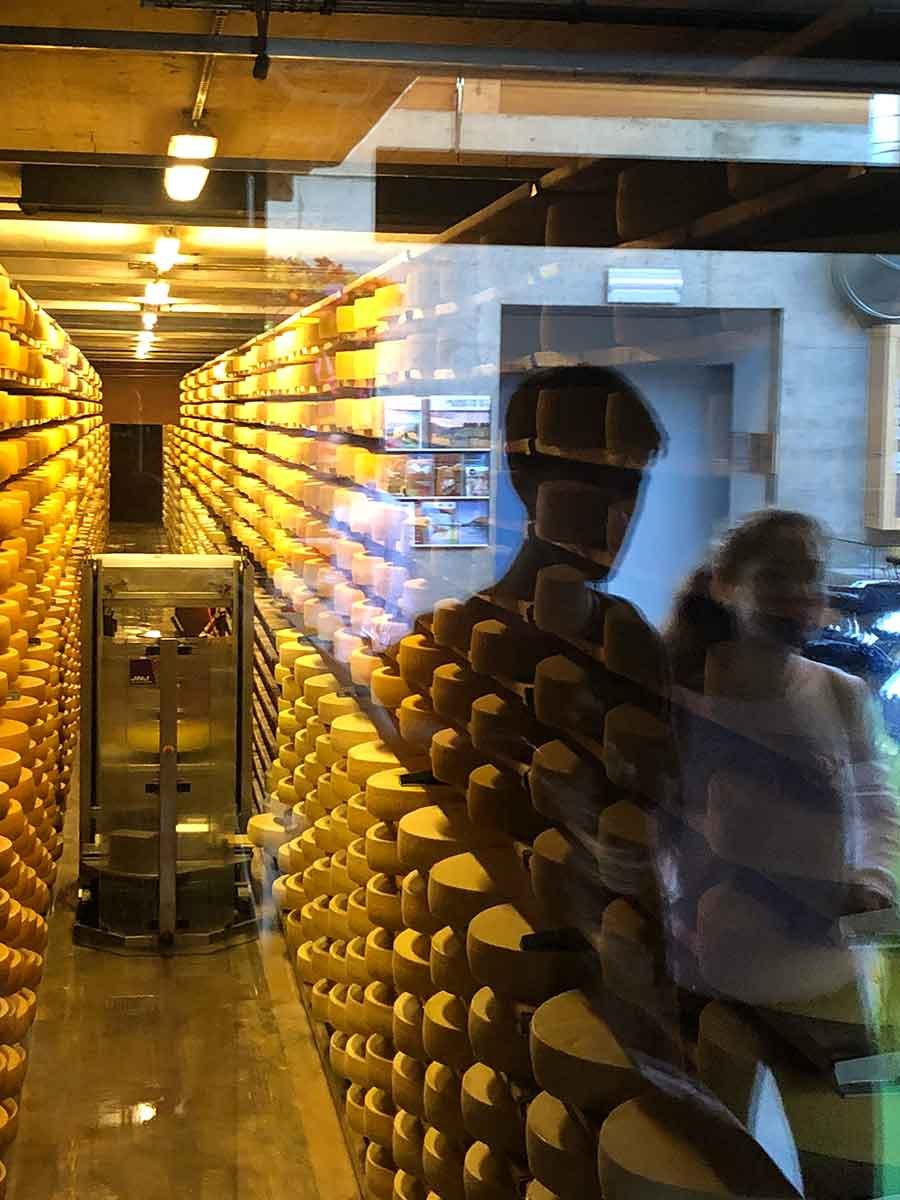
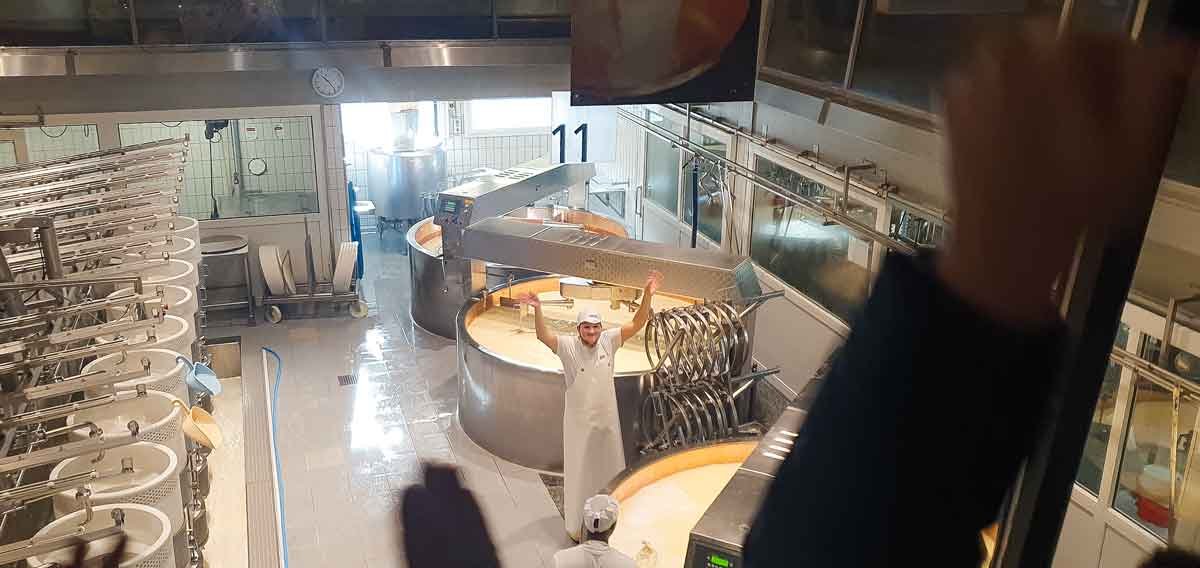
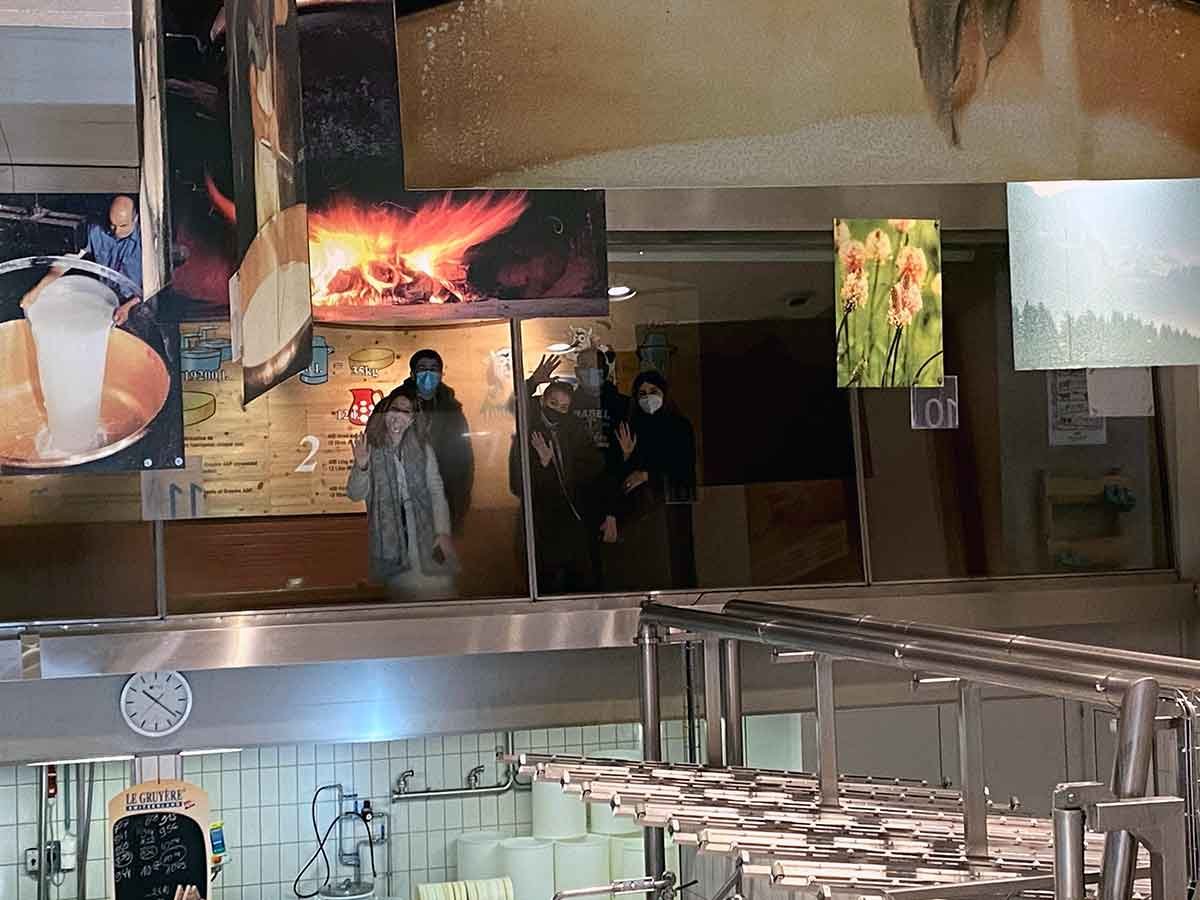
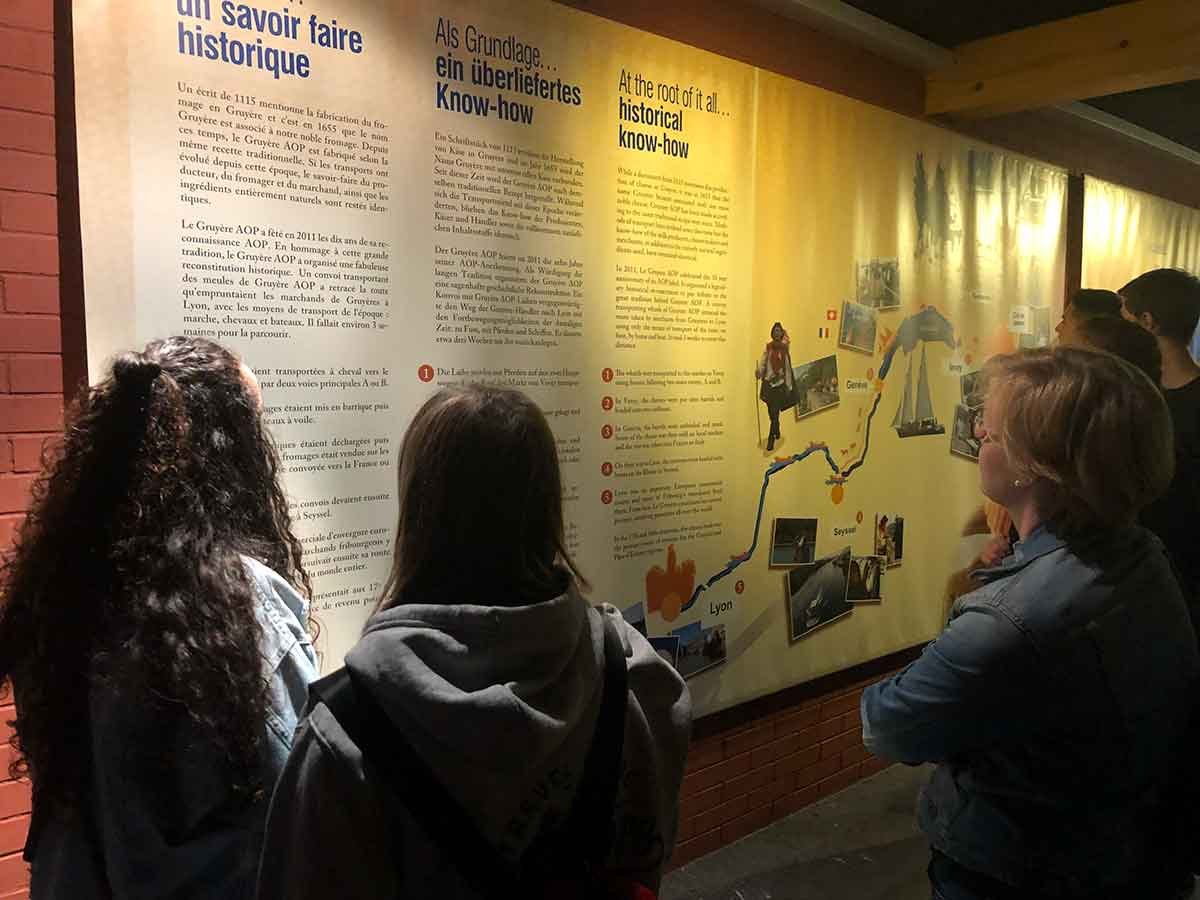
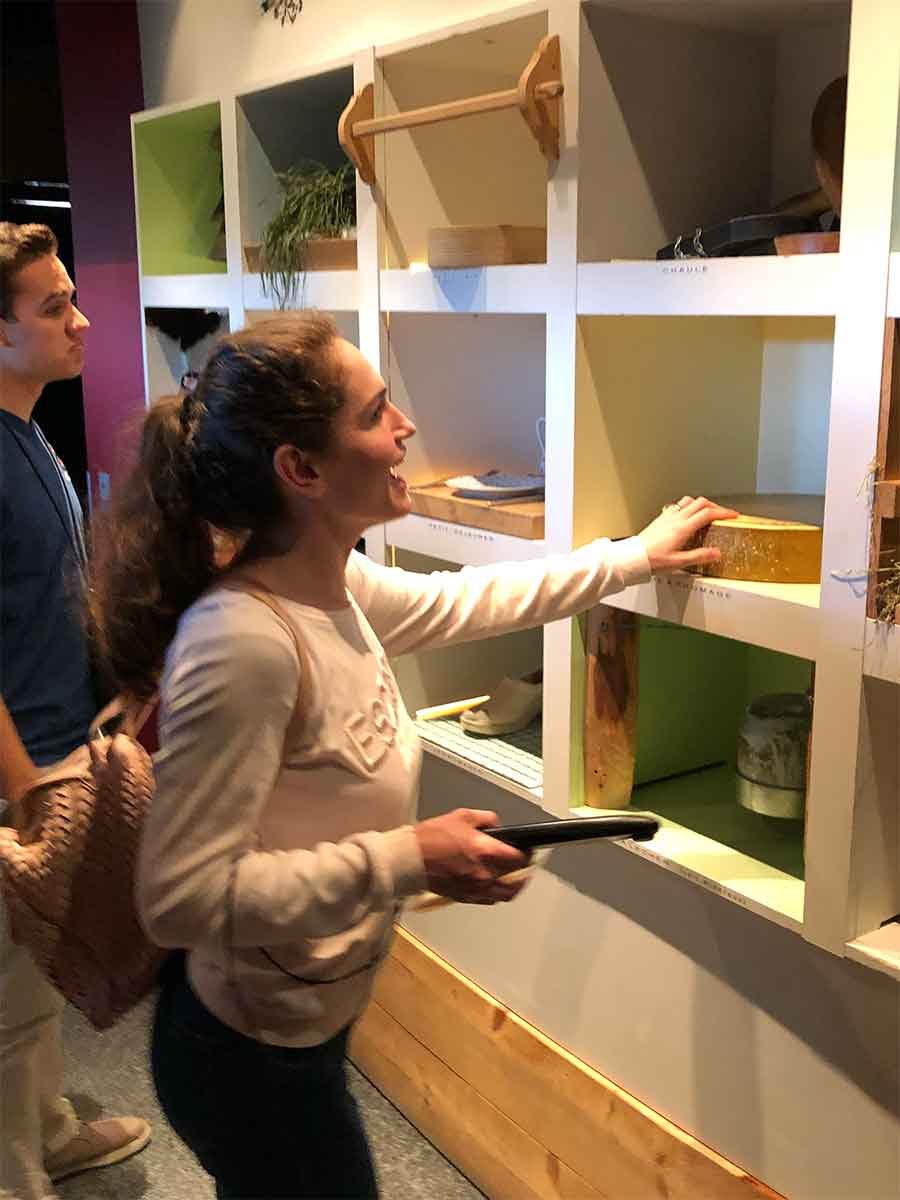
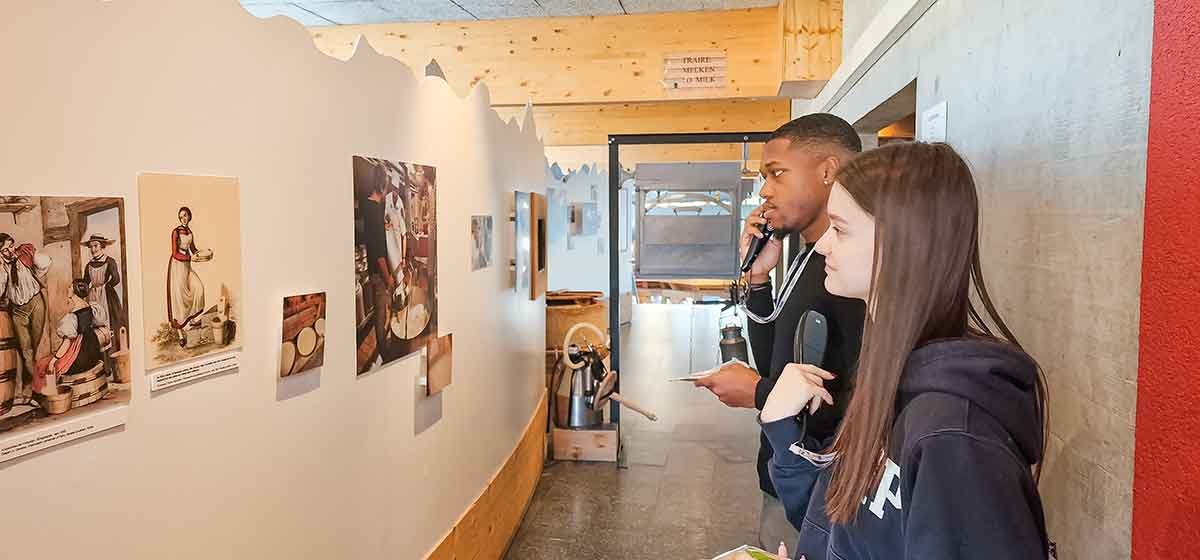
At the Gruyère Cheese Factory, students observed each step of production—from the arrival of fresh milk to the final aging process—while learning how sustainability and traceability are central to maintaining the quality and reputation of a product with Protected Designation of Origin (AOP) status. The visitor center’s interactive displays brought attention to pasture standards, water purity, and the role of traditional techniques in modern food regulation. Conversations touched on agricultural policy, geographic branding, and what it takes to uphold an internationally recognized name.
The Gruyère visit offered more than a look at (and taste of) Swiss cheese—it gave students a deeper appreciation for how national identity, agribusiness, economic protection, and environmental standards intersect. Whether discussing AOP regulations or enjoying their first fondue, students left with a clearer sense of how values like purity, tradition, and sustainability aren’t just preserved—they’re practiced, protected, and passed on.